Group Dog Training vs. One-on-One: Which is Best?
Did you know that over 70% of dog owners face the daunting task of finding the ideal training method for their pets? At activk9s, we grasp the complexities of deciding between group and one-to-one training. These methods hold the power to revolutionise your dog’s behaviour and fortify your relationship.
Identifying the most suitable dog training techniques is paramount for your pet’s growth and your mutual comprehension. Each method boasts distinct advantages, catering to various learning needs and behavioural hurdles.
Our team of professional dog trainers acknowledges that no single technique is universally effective. The essence lies in comprehending your dog’s unique personality, learning modality, and specific training necessities.
Key Takeaways
- Group training provides excellent socialisation opportunities
- One-on-one sessions offer personalised attention
- Different training approaches suit different dog personalities
- Consistent training is more important than the training format
- Professional guidance can help select the most appropriate method
Understanding Training Options for Your Dog
Choosing the right training approach for your canine companion can feel like navigating a complex maze. Every dog is unique, with their own learning needs. Whether opting for group obedience classes or private dog training sessions, understanding the differences is key to making an informed decision.
Dog training is not a one-size-fits-all solution. Different approaches suit different dogs and owners, making it crucial to assess your specific circumstances carefully.
Fundamental Differences in Training Approaches
Group obedience classes and private dog training sessions offer distinct learning environments:
- Group classes provide social interaction and peer learning
- Private sessions offer personalised, focused attention
- Puppy classes typically work best for dogs aged 10 weeks to 6 months
- Adolescent training classes target dogs from 4 months to 18 months
Key Factors in Making Your Decision
When selecting between group obedience classes and private dog training sessions, consider these critical elements:
- Your dog’s temperament and learning style
- Specific behavioural challenges
- Your available time and budget
- Training goals and desired outcomes
Not every dog thrives in a group setting. Some require more individualised attention to overcome specific behavioural issues.
Initial Assessment Considerations
Before committing to any training programme, an initial assessment is vital. Qualified instructors can evaluate your dog’s unique needs, ensuring the most effective training approach. Look for trainers accredited by recognised canine education providers who utilise positive reinforcement techniques.
Remember, the right training method can transform your relationship with your furry friend, creating a stronger, more harmonious bond.
The Social Benefits of Group Training Classes
Puppy socialisation classes transcend basic training, fostering a dynamic environment for dogs to hone essential social skills. Our canine good citizen courses underscore the profound importance of group interactions for dogs across various age groups.
Dogs, by their very nature, are social beings that flourish through interaction. Group training sessions offer unparalleled opportunities for puppies and adult dogs to refine their communication abilities. Such participation enhances their confidence and adaptability.
- Develop social confidence with other dogs
- Learn appropriate play and interaction techniques
- Practice focus and obedience around distractions
- Build foundational skills for future training
The advantages extend beyond the dogs themselves. Owners discover a supportive community where they can exchange experiences, challenges, and triumphs. This collective learning atmosphere benefits both dogs and their human companions.
Group training isn’t just about teaching commands—it’s about creating well-rounded, socially intelligent dogs.
Studies indicate that puppies benefiting from structured socialisation classes exhibit superior interpersonal abilities. These sessions mimic real-world settings, enabling dogs to remain composed and responsive in various environments.
Our puppy socialisation classes are crafted to be both affordable and accessible. This ensures that every dog can participate in a positive, professional environment, fostering their growth and development.
Group Dog Training Versus One to One: A Comprehensive Comparison
Deciding on the appropriate dog training method is a daunting task for many pet owners. Each dog’s learning requirements are distinct, making the choice between group training and one-to-one sessions pivotal for their skill acquisition.
Diverse dog training techniques cater to different canine personalities and learning modalities. Our detailed examination delves into the fundamental distinctions between group and private training sessions.
Cost Considerations and Value Analysis
Cost is a critical factor in evaluating dog training options. Group classes are generally more cost-effective, appealing to those on a budget. On the other hand, private sessions offer:
- Personalised attention
- Tailored training strategies
- Focused skill development
Time Investment Requirements
The time commitment differs between group and one-to-one training. Group classes adhere to a structured schedule, ensuring consistent learning. Private sessions, by contrast, provide:
- Flexible timing
- Adaptable lesson duration
- Customised training pace
Learning Environment Differences
The environment in which training occurs significantly influences learning outcomes. Group settings offer socialisation opportunities, facilitating canine interactions. One-to-one training, on the other hand, is ideal for:
- Dogs with anxiety
- Reactive behaviour management
- Specific skill targeting
Each training method has its unique benefits. The optimal approach hinges on your dog’s specific needs, personality, and learning capacity.
The Personalised Advantage of Private Training
https://www.youtube.com/watch?v=YBu_yc1WzNg
Private dog training sessions revolutionise canine education, offering unmatched advantages for both dogs and their owners. Our bespoke training methods concentrate intensely on modifying dog behaviour, ensuring each pet receives focused support.
Through private sessions, we devise a customised strategy to address your dog’s distinct challenges. Our method enables:
- Customised training plans tailored to your dog’s temperament
- Individualised attention to your dog’s behavioural needs
- Immediate feedback and real-time adjustments
- Elimination of group training distractions
Every dog is different, and our training acknowledges this fundamental truth. By focusing on your dog’s specific needs, we can address complex behavioural issues more effectively than group classes.
Private sessions allow us to deeply understand your dog’s motivations, strengths, and areas for improvement. This personalised approach enables us to swiftly develop strategies that are uniquely effective for your canine companion.
Our aim transcends mere training; we seek to forge a stronger, more empathetic bond between you and your dog.
Choosing private dog training sessions is an investment in a customised learning journey that honours your dog’s unique learning style and potential. Whether addressing basic obedience or complex behaviour modification, our tailored approach guarantees the best outcomes.
Group Classes: Creating a Supportive Learning Environment
Group obedience classes present a vibrant and stimulating training atmosphere for dogs. These sessions are meticulously designed to foster canine psychology and social interaction. They offer a unique platform for dogs to learn and grow together.
The essence of group training resides in its capacity to foster a supportive, interactive learning environment. Dogs, being inherently social, benefit greatly from observing and engaging with their peers. This setting encourages them to thrive in a communal setting.
Peer Learning Opportunities
In group classes, dogs gain numerous advantages:
- They learn through observing the behaviours of their peers.
- They practice their skills in the presence of various distractions.
- They develop social intelligence through controlled interactions.
Building Confidence Through Group Dynamics
Group obedience classes empower dogs to build confidence by introducing them to a variety of social situations. Structured interactions enable timid dogs to gradually become more confident and assertive.
Our training methodology is centered on positive reinforcement. This ensures each dog feels supported and encouraged as they acquire vital skills. The group setting challenges dogs to:
- Stay focused amidst environmental stimuli.
- Learn appropriate social behaviours.
- Develop adaptability and resilience.
Every dog has unique potential waiting to be unlocked through thoughtful, collaborative training.
One-on-One Training: Focused Problem-Solving
At activk9s, we acknowledge the distinctiveness of every canine. Our private dog training sessions are designed to tackle specific behavioural issues your pet may face.
Our one-on-one training methodology delivers an in-depth, personalised strategy for modifying dog behaviour. We understand that certain canine challenges necessitate targeted interventions.
- Tailored solutions for fear-based behaviours
- Targeted approaches to aggression management
- Specialised techniques for separation anxiety
- Precise interventions for excessive barking
During private training sessions, our expert trainers can assess your dog’s behaviour in real-time. They make immediate adjustments to our approach. This hands-on method ensures we’re implementing the most effective strategies for your dog’s specific needs.
Every dog deserves a customised training plan that understands their individual learning style and challenges.
While group classes offer valuable social experiences, private dog training sessions excel in providing focused problem-solving. We create personalised training plans that address your dog’s unique behavioural patterns. This ensures meaningful progress and lasting results.
Our approach transcends standard training techniques. We explore your dog’s specific triggers, learning style, and potential barriers to successful behaviour modification.
Puppy Training: Group vs Private Sessions
Entering the realm of puppy training can be daunting for novice dog owners. The choice between puppy socialisation classes and specific dog training techniques profoundly impacts your pet’s growth.
Puppies thrive in environments designed for their early development and socialisation. Both group and private training sessions present distinct benefits for young canines.
Socialisation Benefits
Puppy socialisation classes are pivotal for young dogs to acquire vital social skills. These early weeks are crucial for learning essential interactions, including:
- Appropriate play behaviours
- Understanding canine body language
- Bite inhibition techniques
- Confidence building with peers
Early Development Considerations
The critical socialisation period extends from 3 to 16 weeks, underscoring the importance of early training. Our methodology prioritises positive, structured interactions for optimal development.
| Training Type | Key Benefits | Best For |
|---|---|---|
| Group Classes | Socialisation, Distraction Training | Basic Commands, Peer Interaction |
| Private Sessions | Personalised Attention | Specific Behavioural Issues |
Our recommended approach combines both group and private training to ensure comprehensive puppy development.
Managing Behavioural Issues: Which Format Works Best
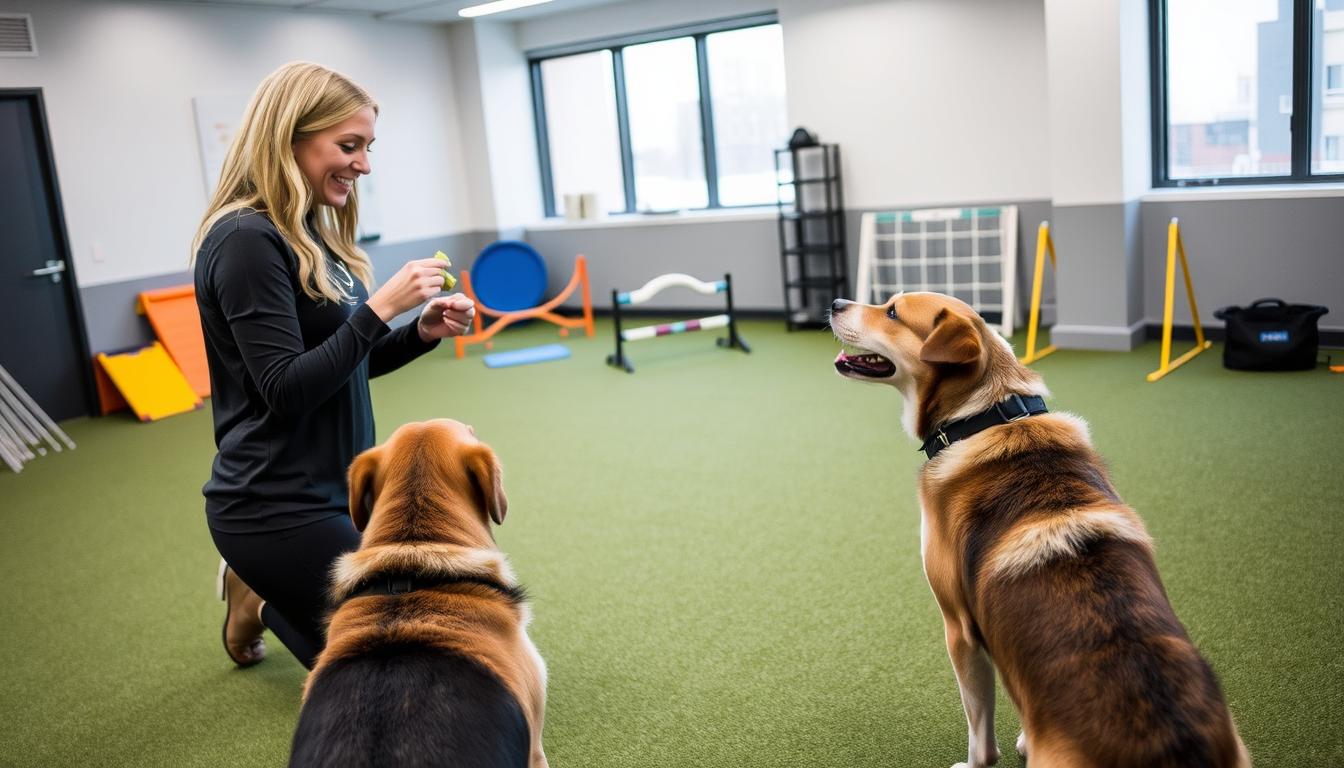
Addressing dog behaviour modification necessitates a tailored approach, one that respects each dog’s distinct psychological makeup. At activk9s, we acknowledge that not every training method is suitable for every canine, given the complexity of certain behavioural challenges.
Our specialist, Malcolm, understands that specific behavioural issues require dedicated attention. Through canine psychology, we’ve discovered that some dogs need customised strategies to overcome their unique challenges.
- Aggression management
- Anxiety reduction
- Socialisation difficulties
- Phobia interventions
Private training sessions offer distinct advantages for dogs facing behavioural complications. Individualised attention enables trainers to craft targeted interventions that address the root causes more effectively than group settings.
| Training Format | Behavioural Issue Effectiveness | Personalisation Level |
|---|---|---|
| Group Training | Limited | Low |
| Private Training | High | Extensive |
While group classes offer valuable socialisation, dogs with severe behavioural challenges often benefit more from focused, one-on-one training. Our method ensures each dog receives customised support aimed at transforming problematic behaviours into positive interactions.
Understanding your dog’s unique psychological landscape is key to successful behaviour modification.
The Role of Environment in Dog Training Success
Grasping the influence of training environments is vital for crafting effective dog training methods. Canine psychology underscores the environment’s pivotal role in a dog’s learning and behaviour evolution.
Diverse training environments present unique benefits for canine learning and development. The choice of environment significantly impacts a dog’s capacity to absorb and retain new skills.
Home Training Benefits
Familiar settings offer several critical advantages for dog training:
- Reduced stress and anxiety for the dog
- Personalised approach to specific behavioural challenges
- Comfort and confidence in learning
Classroom Setting Advantages
Structured training environments provide distinct benefits for developing comprehensive canine psychology skills:
| Environment Type | Learning Outcomes | Skill Development |
|---|---|---|
| Controlled Classroom | Predictable learning scenarios | Socialization and focus |
| Home Setting | Personalised attention | Specific behaviour modification |
*The key is creating a supportive learning environment that matches the individual dog’s needs and learning style.*
Professional dog trainers acknowledge the importance of environment selection in enhancing training outcomes. By strategically managing training settings, we can foster confidence, impart essential skills, and strengthen the bond between dogs and their owners.
Cost-Effectiveness and Training Outcomes
Choosing the appropriate dog training method necessitates a thorough evaluation of both financial expenditure and potential results. Group obedience classes and private dog training sessions present distinct benefits, influencing their value for money.
Let’s dissect the financial and educational facets of various training methodologies:
| Training Type | Average Cost | Learning Effectiveness |
|---|---|---|
| Group Obedience Classes | £100-£200 per course | Good for basic skills |
| Private Dog Training Sessions | £50-£150 per hour | High for specific behavioural issues |
Grasping the subtle distinctions is crucial for dog owners to make well-informed choices:
- Group classes offer structured learning at a lower cost
- Private sessions provide personalised attention
- Both approaches can lead to successful training outcomes
The most cost-effective training is the one that meets your dog’s specific needs efficiently.
When assessing your options, consider your dog’s unique needs, your budget, and their learning style. Some dogs excel in group settings, whereas others profit from individualised coaching.
Professional Training with Malcolm at activk9s
At activk9s, we specialise in delivering top-tier dog training techniques, customised for each dog’s unique needs. Our lead trainer, Malcolm, is a seasoned professional, offering both group and private sessions. This ensures your dog receives the best possible instruction.
Our training philosophy centres on force-free, positive reinforcement methods. These methods foster lasting learning experiences for dogs of all ages and skill levels.
Specialised Training Programs
We provide a range of dog training techniques to address various learning objectives:
- Puppy socialisation classes
- Canine good citizen courses
- Basic and advanced obedience training
- Behavioural problem-solving
Training Options Comparison
| Training Type | Key Benefits | Ideal For |
|---|---|---|
| Group Classes | Socialization, Cost-effective | Puppies, Social Learning |
| Private Sessions | Personalised Attention | Specific Behavioural Needs |
Book Your Session
Ready to enhance your dog’s training journey? Contact Malcolm directly at 089-4120124 to discuss your specific needs. Book a personalised consultation to transform your dog’s training experience.
Combining Both Training Methods for Optimal Results
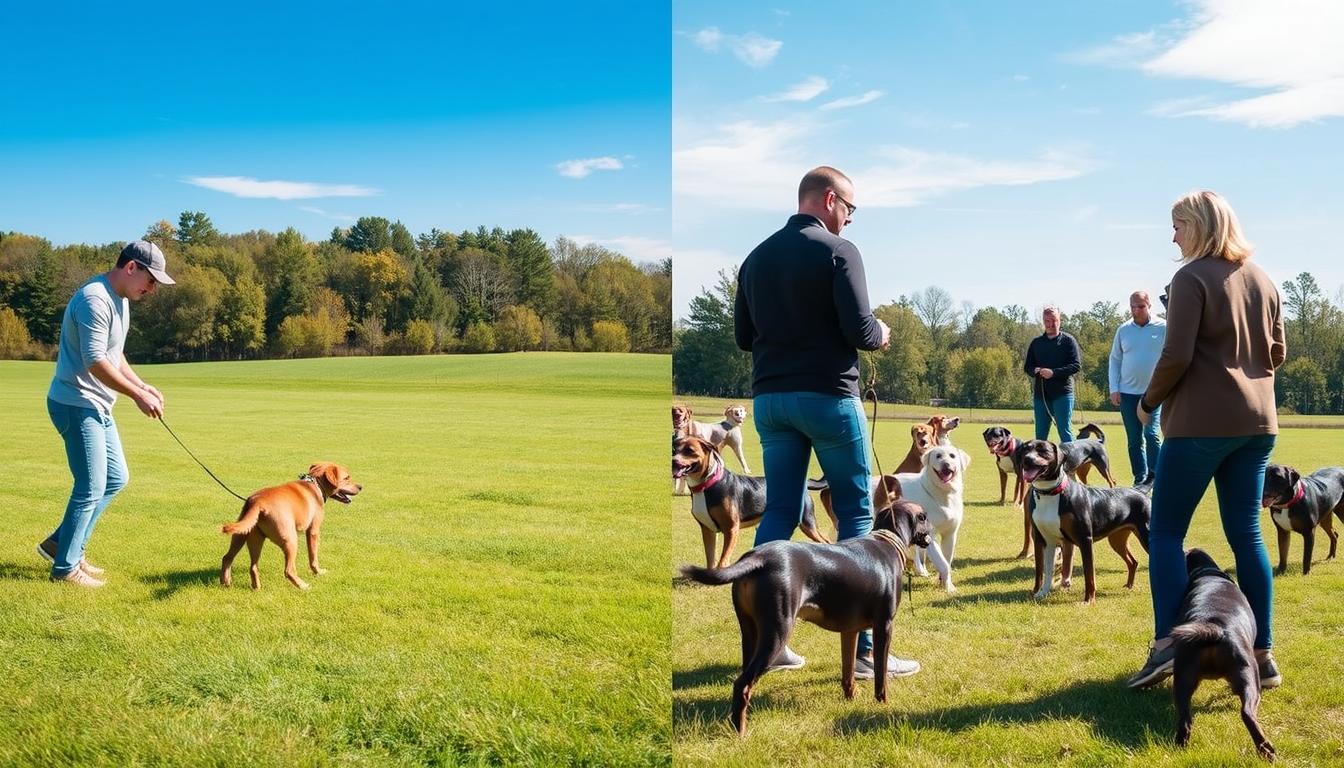
Professional dog training is not a one-size-fits-all solution. At activk9s, we’ve found that blending group and one-to-one training methods offers the most comprehensive learning experience for dogs.
Our studies with working dogs highlight the effectiveness of mixed training methods. Integrating group and private sessions can significantly enhance your dog’s learning outcomes. The essence lies in understanding how different techniques complement each other.
- Group classes provide essential socialisation opportunities
- Private sessions focus on targeted behavioural correction
- Combining approaches meets both individual and collective learning needs
Research with military and police dogs shows that varied training methods lead to superior results. Alternating between group settings and personalised instruction helps dogs develop stronger skills and greater adaptability.
Effective dog training involves creating a flexible, adaptive learning journey tailored to your dog’s unique personality and challenges.
We suggest a strategic training plan that:1. Begins with private sessions to lay the foundational skills2. Moves to group classes for socialisation and distraction training3. Returns to individual coaching for specific behavioural refinements
This method ensures your dog receives thorough, nuanced training. It builds confidence, obedience, and social intelligence.
Advanced Training and Specialised Skills Development
Enhancing your dog’s training necessitates a sophisticated strategy, transcending basic obedience. At activk9s, we excel in refining your canine’s abilities through focused dog agility training and canine good citizen courses.
Advanced training necessitates a refined approach, blending precision with personalisation. Our programmes aim to cultivate advanced skills, pushing your dog’s mental and physical limits.
- Precision off-leash control
- Complex behavioural chain training
- Advanced distance commands
- High-distraction environment performance
Our dog agility training sessions aim to unlock your pet’s full potential. Employing positive reinforcement techniques and bespoke training tools, we craft a customised learning journey. This journey is tailored to your dog’s distinct abilities.
Preparation for canine good citizen courses demands intense, targeted training. Our strategy incorporates:
- Individualised skill assessment
- Progressive training modules
- Gradual complexity introduction
- Comprehensive performance evaluation
We advocate for a hybrid training model. This model combines one-on-one sessions with occasional group training. It offers a balanced approach to skill development and social interaction.
Time Management and Training Schedules
Managing time effectively is crucial in the realm of dog training. The challenge lies in balancing private sessions with group classes for those with hectic schedules. Our research uncovers strategies to optimise training schedules for enhanced results.
A 2011 study by the University of Copenhagen’s Faculty of Life Sciences offers profound insights. It reveals that shorter, less frequent training sessions are most beneficial for dogs. This approach aids in better learning and retention of skills.
Flexibility in Private Sessions
Private dog training sessions offer unmatched flexibility in scheduling. This flexibility enables owners to:
- Customise training times to fit their personal schedules
- Target specific behavioural issues
- Ensure individualised attention for their dog
Fixed Schedule Benefits in Group Classes
Group obedience classes, on the other hand, provide a structured environment with notable benefits:
- Consistent weekly sessions
- A predictable training routine
- Opportunities for socialisation among dogs
Interestingly, research shows that dogs trained once or twice a week outperform those trained more frequently. This highlights the importance of finding the right balance in training schedules.
| Training Frequency | Learning Effectiveness | Time to Master Skills |
|---|---|---|
| Once per week | Highest | Approximately 9 weeks |
| Twice per week | High | Around 6-7 weeks |
| Five times per week | Lowest | Less than 4 weeks |
Pro tip: Remember that each dog is unique. Observe your furry friend’s learning pace and adjust training schedules appropriately.
Building Long-term Training Success
Attaining lasting success in dog behaviour modification necessitates a strategic and consistent methodology. Professional trainers acknowledge the intricacy of canine psychology, requiring persistent effort beyond the initial training phases.
Essential strategies for achieving enduring training success encompass:
- Establishing consistent daily training routines
- Implementing 15-20 minute focused training sessions
- Adapting techniques to your dog’s unique learning style
- Maintaining patience and positive reinforcement
Early training is pivotal in averting behavioural issues. Professional guidance ensures that training techniques are tailored to your dog’s specific needs, laying a robust foundation for long-term behavioural enhancements.
Dogs benefit from predictability and structured learning environments. By blending group training experiences with bespoke private sessions, owners can devise comprehensive training plans. These plans address both social skills and individual challenges in dog behaviour modification.
Training is not a destination, but a continuous journey of communication and understanding.
The most successful training methodologies integrate learned techniques into daily interactions. This transforms every moment into a potential learning opportunity for your canine companion.
Conclusion
Our exploration has highlighted the distinct advantages of group versus one-to-one dog training techniques. Each method offers unique benefits for your dog’s development and behaviour. The crucial step is identifying your specific needs and choosing the most suitable training approach.
Our findings indicate that dog training success hinges on a tailored approach, not a generic solution. Some canines excel in group settings, while others benefit from individualised attention. Experts advise evaluating your dog’s temperament, learning style, and specific needs before deciding.
At activk9s, we are committed to force-free, scientifically-backed training that honours your dog’s unique personality. Whether opting for group classes for socialisation or private sessions for focused skill-building, our aim is consistent: fostering robust, positive bonds between dogs and their owners. Your dedication to understanding and supporting your dog’s learning journey is paramount for successful training.
We encourage you to explore our diverse training options, acknowledging that the ideal strategy often blends group and individual training elements. With patience, understanding, and professional guidance, your dog’s potential is boundless.
FAQ
What are the main differences between group dog training and one-on-one sessions?
Group classes offer a social environment where dogs can learn from each other, enhancing their socialisation. In contrast, one-on-one sessions provide focused attention, addressing specific issues. Group training is often more affordable, offering a structured setting. Private sessions, on the other hand, cater to individual needs, offering a tailored approach.
Which training method is better for puppies?
For puppies, a blend of group and private sessions is ideal. Group classes are essential for socialisation during the critical 3-16 week period. They help puppies develop social skills and build confidence. Private sessions can then address specific puppy-related issues, such as house training or excessive chewing.
How do I choose between group and private dog training?
Assess your dog’s individual needs, temperament, age, and specific behavioural challenges. Consider your budget, schedule, training goals, and your dog’s comfort in social settings. An initial consultation with a professional trainer can help determine the most effective approach.
Are group classes suitable for dogs with behavioural issues?
Not always. Dogs with severe anxiety, aggression, or complex behavioural problems may benefit more from private sessions initially. Once these issues are addressed, gradual integration into group classes can help generalise positive behaviours.
How cost-effective are group versus private training sessions?
Group classes are generally more budget-friendly per session, making them attractive for basic obedience and socialisation. Private sessions, while more expensive, can lead to faster progress and potentially fewer overall sessions. This can balance out the higher cost.
Can I combine group and private dog training?
Absolutely! Many trainers recommend a combined approach. Use private sessions to address specific issues and build foundational skills. Then, reinforce and generalise these skills in group classes. This method can be highly effective for comprehensive dog training.
What are the benefits of group dog training classes?
Group classes provide excellent socialisation opportunities, helping dogs learn to focus amidst distractions. They allow for peer learning, enabling dogs to build confidence and practice social skills. Dogs can learn to behave around other dogs and people in a controlled environment.
When should I consider private dog training sessions?
Private sessions are ideal for addressing specific behavioural issues or complex training challenges. They’re also useful for dogs that struggle in group settings. Private sessions are beneficial for leash reactivity, separation anxiety, or dogs needing focused attention.
How long does dog training typically take?
Training duration varies based on the dog’s age, breed, individual challenges, and consistency of practice. Basic obedience skills can be learned in 4-6 weeks. More complex behavioural modifications may require several months of consistent work.
What should I look for in a professional dog trainer?
Seek a trainer with experience, positive, force-free training methods, and a science-based approach. Check their qualifications, ask about their training techniques, and ensure they can provide a personalised approach to your dog’s specific needs.
Source Links
- Dog training in group classes vs private lessons, which the best? – https://andreaarden.com/puppy-training/private-lessons-or-group-classes-for-dog-training-which-is-best/
- Group vs One-to-One Dog Training: Pros, Cons, and Finding the Right Fit for Your Dog – https://connected-canines.newzenler.com/blog/group-vs-one-to-one-dog-training-pros-cons-and-finding-the-right-fit-for-your-dog
- One to One Dog Training or Group Dog Training Classes? – https://oncloudk9.newzenler.com/blog/one-to-one-dog-training-or-group-dog-training-classes
- No title found – https://www.akc.org/expert-advice/training/pros-cons-dog-trainer-home-vs-class/
- Group Vs. Private Dog Training: Finding The Best Fit For Social Skills And Success – https://offleashk9nova.com/group-vs-private-dog-training/
- Sit n’ Stay Pet Services, Inc. Buffalo NY – https://www.sitnstaydogtraining.com/About-Us/Blog/the-benefits-of-group-dog-training
- Which Dog Training? Positive, Obedience, Private: A Vet’s View – https://www.walkervillevet.com.au/blog/dog-training-adelaide/
- Dog Training Classes: How to Find the Best One For You – https://www.pumpkin.care/blog/dog-training-classes/
- Why Dog Training Matters – Toronto Humane Society – https://www.torontohumanesociety.com/why-dog-training-matters/
- Personalized Learning: The Advantages of Private Dog Training – https://ruffacademywi.com/personalized-learning-the-advantages-of-private-dog-training/
- Private Dog Training vs. Group Classes | Four Paws Inn – https://www.fourpawsinntx.com/blog/private-dog-training-vs-group-classes/
- The Benefits of In-Home Dog Training: A Personalized Approach to Obedience — The Trusted Companion – https://www.thetrustedcompanion.com/the-benefits-of-in-home-dog-training
- Private Dog Training Vs Group Classes?<br/> – https://www.familypupz.com/blog-2/2020/1/13/private-dog-training-vs-group-classes
- Dog Training: One-On-One or Class? – TAILored Pet Services LLC – https://tailoredpetservices.com/2024/dog-training-one-on-one-or-class/
- What to Expect at a Dog Training Class – https://www.zoetispetcare.com/blog/article/dog-training-class
- Group Classes or Private Training: Which Is Best for Your Dog? (Vet Answer) – Dogster – https://www.dogster.com/ask-the-vet/which-is-best-for-my-dog-group-classes-or-private-training
- Online vs. In-Person Dog Training | K9 Basics – https://k9basics.com/online-vs-in-person-dog-training/
- Dog Training: Group Class vs Private Lessons – Thriving Canine – https://www.thrivingcanine.com/blog/dog-training-group-class-vs-private-lessons/
- Group Training Or Private Lessons: Which Is Right For Your Dog? – https://www.offleashk9training.com/group-training-or-private-lessons-for-dogs/
- Dog 1-2-1 Training and Rehabilitation — Petsercise – https://www.petsercise.uk/one-to-one-training-and-rehabilitation-puppy-/-senior
- My Approach To Dog Behaviour & Training | Doglistener – https://www.doglistener.co.uk/approach-shtml/
- Why group training classes are important | Potter Paws Dog Training – https://www.potterpaws.co.uk/blog-post/why-are-group-classes-important/
- Dog Training Methods and Beliefs- What are the differences? – De Marinis Dog Training & Behavior – https://demarinisdogtraining.com/dog-training-methods-and-beliefs-what-are-the-differences/
- Denton Dog Training: Group Classes or Private Lessons—What’s Right? — The Collar Club Academy – https://www.thecollarclubacademy.com/blog/denton-dog-training-comparing-group-sessions-and-private-lessons-for-optimal-results
- Offering Private vs Group Dog Training Services: Pros and Cons – https://www.gingrapp.com/blog/offering-private-vs-group-dog-training-services
- How Much is Dog Training? Costs and Considerations Guide – https://roguepetscience.com/blogs/dog-training/dog-training-cost?srsltid=AfmBOooxaStpeuWKO6XlENykZo7nGQUk8krP9t_4DhPArfPYcesq4PE3
- Activk9s Dog & Puppy obedience training in Clonmel – https://activk9s.com/
- Group Classes vs Private Lessons Part One – Paws-A-Tive Choice LLC – https://pawsativechoice.com/group-classes-vs-private-lessons/
- Improving dog training methods: Efficacy and efficiency of reward and mixed training methods – https://journals.plos.org/plosone/article?id=10.1371/journal.pone.0247321
- Improving dog training methods: Efficacy and efficiency of reward and mixed training methods – https://pmc.ncbi.nlm.nih.gov/articles/PMC7895348/
- Knowing Where You’re Going part 1: Working Dog vs Pet Dog Training – Thriving Canine – https://www.thrivingcanine.com/blog/working-dog-vs-pet-dog-training-part-1-knowing-where-you-are-going/
- The Difference Between Basic and Advanced Dog Obedience Training | ACT – https://alternativecaninetraining.com/difference-between-basic-advanced-dog-obedience-training/
- Distinctive Dog Trainer Course, Group Coaching & Assessment – (Single Payment) – Pet Professional Network – https://www.petpronetwork.com/product/distinctive-dog-single/
- Training Sessions – Less is More… – https://louisesdogblog.wordpress.com/2012/11/28/training-sessions-less-is-more/
- Multiple Dogs — Tailored Dog Training – https://www.tailoreddogtraining.com/blog/2017/2/19/multiple-dogs
- Dog Training: How often & for how long should you train your dog? – https://www.linkedin.com/pulse/dog-training-how-often-long-should-you-train-your-jonckheer-sheehy
- The Benefits of Dog Training for a Lifetime of Success – https://performancek9training.com/the-benefits-of-dog-training-for-a-lifetime-of-success-why-start-now/
- One-on-one vs. Group Classes Dog Training in Edmonton, Alberta – Dog Jogs – https://dog-jogs.ca/one-on-one-vs-group-classes-dog-training-in-edmonton-alberta/
- One to One Dog Training – Everything You Need to Know – https://lead-academy.org/blog/one-to-one-dog-training/