Stress in Dogs: Recognising and managing stress in dogs.

.

Did you know about 20% of dogs face anxiety at some point? It’s key to know how to recognising and managing stress in dogs – a comprehensive guide to keep them happy and healthy.

As a dog trainer at Activk9s Training, I’ve seen how stress affects dogs. This guide will give you the tools to help your dog’s mental health.

Dogs feel stress just like people do. It can really change their life. We’ll show you how to spot these signs and manage them.

Key Takeaways

  • Understanding canine stress is critical for responsible pet ownership
  • Stress can manifest through various physical and behavioural indicators
  • Early recognition of stress signals can prevent long-term health issues
  • Professional training and support can help manage dog anxiety
  • Creating a stable environment reduces possible stress triggers

Understanding Canine Stress: Basic Concepts

Stress affects dogs just like it does humans. It’s important to know how to manage stress in dogs for their health. Dogs show stress through their bodies’ responses.

Dogs show stress in many ways. About 50% of dog owners see signs of anxiety in their pets when things get tough.

What is Stress in Dogs?

Stress in dogs is a way to react to threats or hard situations. It changes how they act and feel to help them stay safe. Signs of stress include:

  • Lip-licking
  • Crouched body posture
  • Slowing down
  • Paw lifting
  • Lowered body approach

The Role of the Sympathetic Nervous System

The sympathetic nervous system is key in how dogs deal with stress. It gets ready for threats by changing the body’s functions. This system makes the famous “fight or flight” response, releasing hormones like cortisol and adrenaline. Learn why calming anxious dogs is important.

Stress Response Stage Physiological Changes
Alarm Stage Increased heart rate, heightened alertness
Resistance Stage Adaptation to stressor, hormone regulation
Exhaustion Stage Potential long-term health impacts

Impact on Dog’s Wellbeing

Long-term stress can harm a dog’s health. Up to 30% of dogs may get health issues from chronic anxiety. It’s vital to spot and tackle stress early to keep your dog healthy and happy. Reducing dog anxiety is key.

Using professional methods to reduce stress can keep your dog well. This ensures they stay emotionally balanced and healthy.

The Science Behind Dog Stress Response

It’s key to know how dog stress works to help them feel better. The stress response in dogs is complex, involving both body and brain. It affects a dog’s whole body. Learn how to see signs of dog distress.

When a dog gets stressed, its nervous system kicks in. Cortisol, known as the stress hormone, is very important. Studies show how stress impacts dogs:

  • Cortisol levels can spike quickly when dogs are stressed
  • Long-term stress can change a dog’s body a lot
  • Dogs react differently to stress

Our research shows interesting facts about dog stress:

Stress Indicator Measurement Impact
Cortisol Levels Decreased by 10 minutes of petting Temporary stress reduction
Heart Rate Slows with gentle handling Calming physiological response
Behavioral Changes Reduced through targeted interactions Improved stress management

Knowing these scientific facts helps dog owners manage their pet’s stress better. By understanding stress biology, we can make a better environment for our dogs. This helps reduce anxiety and improves their emotional health.

Recognising and Managing Stress in Dogs – A Guide

It’s vital to understand stress in dogs for their emotional and physical health. We need to watch them closely and act quickly to help them through tough times.

Dogs show stress in many ways, both physically and behaviourally. Our guide will show you how to spot and deal with these signs.

Physical Manifestations of Canine Stress

Stress can cause many physical changes in dogs. Look out for these signs:

  • Excessive shedding
  • Sudden changes in body posture
  • Trembling or shaking
  • Increased heart rate
  • Heavy panting unrelated to temperature

Behavioural Indicators of Stress

​Understanding the behavioural indicators of stress in dogs is crucial for pet owners who wish to foster a healthy, happy environment for their furry companions. Dogs often exhibit a range of signs when they are feeling anxious or overwhelmed, and being able to identify these behaviours is key to effectively addressing their needs.

 Common indicators may include pacing, excessive barking, drooling, lowered body posture, or even withdrawal from social interactions. Noticing these cues early can help in minimising dog stress triggers and creating a more comfortable atmosphere for them.

Recognising and managing stress in dogs requires a comprehensive guide to help owners pinpoint the exact causes of their pet’s anxiety. This could range from environmental changes, such as moving to a new home, to more specific factors like loud noises or aggressive encounters with other animals. 

It’s important for dog owners to remain observant and attuned to their pet’s behaviour, as what stresses one dog may not affect another. By being proactive and implementing stress-reducing techniques, such as providing a safe space or engaging in soothing activities, owners can make significant improvements in their dog’s emotional wellbeing.

Identifying stressed dog behaviour shouldn’t be a daunting task. Instead, it can be empowering for an owner when they learn to read their dog’s body language and vocalizations. For example, a dog that suddenly starts to hide or avoids certain areas may be experiencing distress linked to specific stress triggers. 

Even subtle signs, such as a change in eating habits or increased clinginess, are worth noting. This heightened awareness facilitates timely interventions, allowing for appropriate training or environmental adjustments that can alleviate stress in a dog’s life.

Ultimately, understanding the behavioural indicators of stress and how to manage them not only helps in improving a dog’s quality of life but also strengthens the bond between the pet and owner.

Educating oneself about stress management techniques is an invaluable step in ensuring that your dog’s emotional and physical health are prioritized.

 By investing time in recognising these signs and addressing them effectively, owners can create a harmonious living environment that supports their furry friends through the ups and downs of life.

Behavioural changes are key to understanding dog stress. Watch for these signs:

  • Destructive behaviours like chewing furniture
  • Excessive barking or whining
  • Pacing or restlessness
  • Reduced appetite
  • Aggressive reactions

Early Warning Signs

Spotting stress early can stop it from getting worse. Look out for these subtle signs:

Stress Indicator Potential Meaning
Whale eye Feeling uncomfortable or anxious
Lip licking Mild stress or uncertainty
Tucked tail Fear or significant anxiety

Knowing these signs helps dog owners support their pets and create a calmer home.

Common Triggers of Stress in Dogs

It’s key to know what stresses dogs out to keep them happy. Dogs get stressed from different things, depending on who they are and what they’ve been through.

Spotting stressed dog behaviour starts with knowing what stresses them:

  • Environmental Stressors
    • Loud noises (thunderstorms, fireworks)
    • Unfamiliar environments
    • Sudden routine changes
  • Social Triggers
    • New people or animals
    • Crowded spaces
    • Lack of social interaction

About 70% of dogs show stress signs at the vet. Sound sensitivities and separation anxiety are big stressors. Sixty percent of owners say their dogs get anxious during loud events like thunderstorms.

What affects a dog’s stress varies. Age, past experiences, health, and brain function all matter. They influence how dogs deal with stress.

Dogs show stress through different ways. This includes more barking, body language changes, and physical signs.

Thirty percent of dogs act stressed in new places. This shows how vital it is to know and reduce stressors in their world.

Physical Signs of Stress in Canines

Knowing how to spot dog stress signals is key for pet owners. Spotting signs of distress early can stop anxiety from getting worse. Dogs show their feelings through physical and behaviour changes that owners need to understand.

Dogs react to stress in different ways. Up to 80% may show small signs of stress in new places. It’s vital to know these subtle signs.

Body Language Indicators

Stress can show in a dog’s body language. Look out for:

  • Excessive yawning
  • Repeated lip licking
  • Tail tucking
  • Ears pinned back
  • Avoiding eye contact

Physiological Changes

Stress makes dogs’ bodies change a lot. Their nervous system reacts with:

  • Increased heart rate (20-30 beats per minute elevation)
  • Rapid panting
  • Dilated pupils
  • Sweating through paw pads

Stress-Related Health Issues

Long-term stress can harm a dog’s health. About 15% may develop compulsive behaviours like too much licking, leading to skin problems. Around 25% might show displacement behaviours, showing stress.

Vets suggest watching for stress signs and getting help if they don’t go away. Early action can stop long-term health and behaviour problems.

Behavioural Manifestations of Canine Stress

It’s vital to spot stressed dog behaviour to keep your pet’s mind healthy. Dogs show stress in many ways, like certain actions that mean they’re feeling upset.

Stress in dogs can show up in different ways. These signs are important clues about how your dog is feeling:

  • Excessive pacing or repetitive movements
  • Sudden aggression or withdrawal
  • Persistent lip licking
  • Frequent yawning when not tired
  • Trembling without apparent cause

Stereotypic behaviours are key in spotting stress in dogs. Actions like tail chasing, circling, or flank sucking show deep anxiety. These happen when dogs can’t handle stress well.

Some dogs have complex stress reactions. These can lead to big changes in their behaviour, like:

  1. Loss of appetite
  2. Reduced interest in play
  3. Increased vocalization
  4. Avoidance of social interactions

Knowing these signs helps owners act fast to stop long-term harm. Helping a stressed dog needs patience, watching closely, and sometimes expert help.

Dog TTouch Massage Techniques

Types of Stress Responses in Dogs

It’s key for pet owners to understand how to manage their dog’s stress. Dogs have different ways of showing stress, which affects their health and behaviour.

Stress in dogs is complex. Studies show that 72.5% of dogs exhibit at least one anxiety-related behaviour. This highlights the need to know about the various stress responses.

Acute Stress Response

Acute stress is a quick reaction to sudden changes. Dogs show this through:

  • Rapid breathing
  • Increased heart rate
  • Temporary heightened alertness

Chronic Stress Patterns

Chronic stress builds up over time, causing long-term challenges. Signs include:

  • Persistent behavioural changes
  • Prolonged physiological alterations
  • Potential long-term health implications

Environmental Stress Factors

Environmental factors greatly affect a dog’s stress levels. Dogs are very sensitive to their surroundings.

Stress Factor Prevalence Impact
Noise Sensitivity 32% High anxiety trigger
General Fear 29% Moderate stress response
Canine Interactions 17% Social stress indicator

Dogs can show over 30 stress signals before they can’t take it anymore. Cortisol, their main stress hormone, stays in their system for up to 48 hours. This shows why managing stress is so important.

Prevention Strategies for Dog Stress

It’s key to know and reduce what causes dog stress to keep them happy. We aim to make a safe space for dogs to grow strong against stress and learn relaxation techniques for dogs.

Stopping stress before it starts is the best way to handle it. Teaching dogs to relax helps owners avoid anxiety problems.

  • Establish predictable daily routines
  • Create safe, calm spaces at home
  • Introduce gradual socialisation experiences
  • Use positive reinforcement training

About 20% of dogs get anxious when left alone. This shows why we need to act early to manage stress. Making the environment richer can cut down stress by 40%.

“A calm dog is a happy dog – prevention is always better than cure.”

Important prevention steps include:

  1. Regular exercise and mental stimulation
  2. Controlled exposure to stressors
  3. Consistent training methods
  4. Spotting anxiety signs early

Knowing your dog’s stress signs and teaching them to relax helps. This way, you can build a supportive space for their emotional health.

Natural Stress Relief Methods for Dogs

Dogs feel stress just like people, with about 30% showing anxiety signs. Knowing how to help can make their lives better. It’s all about improving their emotional health.

Natural ways to relax dogs are great for their anxiety. These methods create a calm space without drugs.

Exercise and Mental Stimulation

Exercise is key for dog stress relief. Studies show dogs with 30 minutes of daily activity can feel less anxious. Good activities include:

  • Interactive play sessions
  • Walking or running
  • Fetch games
  • Agility training

German Shepherd Holistic Care

Environmental Enrichment Strategies

A calm environment is vital for dog stress management. Try these relaxation tips:

  1. Provide quiet, safe spaces
  2. Use sound therapy with gentle music
  3. Introduce puzzle toys
  4. Maintain consistent daily routines

Calming Techniques

There are many natural ways to calm an anxious dog. Acupressure and gentle massage can really help. Other methods include:

  • Thundershirts® (calming 80% of dogs)
  • Aromatherapy with dog-safe essential oils
  • Consistent positive reinforcement
  • Gradual desensitization training

Using these natural methods can make your dog feel safer and more relaxed. It’s all about emotional balance.

Professional Support and Treatment Options

When home remedies don’t work, expert help is needed for canine stress management. Professional help is key if your dog’s anxiety affects their life or behaviour a lot.

Vets and certified dog behaviourists offer detailed plans to reduce dog anxiety. They create strategies that fit your dog’s specific stressors and reasons for anxiety.

  • Veterinary consultation for medical assessment
  • Certified behaviourist evaluation
  • Specialised anxiety management techniques
  • Potential medication recommendations

About 20% of dogs face anxiety. Professional help can manage these complex feelings with targeted actions.

Treatment options include:

  1. Behaviour modification techniques
  2. Pharmacological interventions
  3. Environmental management strategies
  4. Targeted desensitisation programmes

Vets might suggest medicines like SSRIs or benzodiazepines for serious anxiety. These aim to calm your dog’s emotions and boost their happiness.

Early professional intervention can significantly reduce long-term stress-related complications in dogs.

For tailored advice, talk to professional dog trainers who specialise in anxiety. They can offer custom plans to help your dog handle stress better.

Creating a Stress-Free Environment

Making your home a peaceful place for your dog is key. Dogs love safe, predictable, and comfy spots. Knowing what they need can turn your home into a calm space.

Here are some ways to help your dog relax:

  • Set up regular daily routines
  • Make quiet areas for them
  • Control what they see and hear
  • Give them things that feel good to touch

Studies show that a structured home can cut dog anxiety by 60%. A regular routine makes dogs feel safe and lowers stress.

“A calm home environment is the foundation of a happy, relaxed dog.” – Veterinary Behavioural Experts

It’s important to know what stresses your dog. Loud sounds, new people, and big changes can upset them. Think about making a quiet spot where they can hide when feeling overwhelmed.

Stress Reduction Technique Effectiveness
Consistent Feeding Schedule 65% Stress Reduction
Daily Exercise 55% Anxiety Mitigation
Quiet Retreat Space 70% Comfort Improvement

Using these tips will help make your home a better place for your dog’s emotional health. It will also help them stay happy and well for a long time.

Conclusion

Our journey into canine stress management shows how vital it is to know our dogs’ feelings. Breeds like German Shepherds and Border Collies are more prone to anxiety. They need owners who are dedicated to helping them manage stress.

Managing stress in dogs goes beyond just spotting symptoms. It’s about creating a whole approach that looks at their physical and mental health. Regular walks, healthy food, and watching them closely can help a lot. This can stop problems like weak immune systems and depression.

Getting help from vets and trainers is key in dealing with stress. They can give plans that fit each dog’s personality and needs. By being proactive in managing stress, we can make our dogs happier and healthier.

It’s important to always be on the lookout for your dog’s stress signs. Always be ready to ask for help and make sure your dog’s emotional health is a priority. This way, we can have better, happier relationships with our dogs.

FAQ

What are the primary signs of stress in dogs?

Dogs show stress in many ways. They might pant a lot, tremble, or lick their lips. They could also yawn, change how they stand, eat less, get more aggressive, or avoid things. Each dog reacts differently to stress.

How does stress affect my dog’s overall health?

Stress can really hurt a dog’s health. It can weaken their immune system and cause stomach problems. It might also lead to skin issues, make them get sick more easily, and change their behaviour. Long-term, it could even cause hormonal problems and lower their quality of life.

What are the most common triggers of stress in dogs?

Many things can stress dogs out. Loud noises like thunderstorms or fireworks are big ones. Changes in their routine or new places can also be stressful. Being away from their owners, meeting new people or pets, vet visits, moving, and past scary experiences are other common stressors.

Can dogs experience different types of stress?

Yes, dogs can face short-term and long-term stress. Short-term stress happens during specific events. Long-term stress comes from ongoing problems or challenges.

How can I help my dog manage stress?

To help your dog, make their routine predictable and give them a safe place. Use positive reinforcement and make sure they get enough exercise and mental challenges. Gradually introduce them to things that might stress them. Try calming techniques like massage. If stress is really bad, get professional help.

When should I seek professional help for my dog’s stress?

Get help if your dog’s stress doesn’t go away, affects their daily life, or leads to aggression. If their eating or sleeping habits change a lot, or if you can’t handle it at home, seek help. Vets, behaviourists, and trainers can offer expert advice.

Are some dog breeds more prone to stress?

Yes, some breeds might be more stressed due to their genes, temperament, and personality. High-energy dogs, those with past traumas, or less socialised dogs might be more stressed.

Can diet and exercise help reduce my dog’s stress?

Yes, they can. Exercise releases happy hormones and reduces anxiety. A balanced diet supports their health and stress resistance. Talk to a vet to create a diet and exercise plan that’s right for your dog.

How long does it take to help a dog overcome stress?

It depends on the dog, how stressed they are, and the help they get. Some dogs might get better in weeks, while others might need months of support.

Can my own stress affect my dog?

Yes, dogs can sense their owners’ stress. Being calm and managing your stress can help your dog feel better. Create a happy home environment to support your dog’s well-being.



Decode Your Dog’s Canine Body Language: What Their Signals Mean

Ever thought about what your dog is really saying? It’s not just about barks and wagging tails. Learning canine body language is like cracking a secret code. It shows your dog’s true feelings and what they want.

Dogs are experts at talking without words. They use a complex system of signals. Their body language is a detailed map of their emotions, fears, and wishes.

As dog trainers, we know how important it is to understand dog communication. It can change how you connect with your dog. By reading their signals, you’ll feel closer and understand them better than ever before.

Key Takeaways

  • Dogs communicate mainly through body language
  • Tail position and movement show their emotions
  • Ear and eye signals are key to understanding them
  • Knowing body language builds trust with your dog
  • Spotting stress signals can prevent bad behaviour

The Importance of Understanding Your Dog’s Communication

Dogs communicate in many ways, not just through words. It’s key to understand their language to build a strong bond. Reading their body language is more than just watching them – it’s about understanding their unique way of speaking.

Reading dog body language means paying close attention to different signs. Dogs talk to us through:

  • Subtle body postures
  • Facial expressions
  • Tail movements
  • Ear positions
  • Vocal sounds

Basic Elements of Canine Communication

Dogs communicate in a complex way, with 85% of their talk being nonverbal. They use a range of signals, with small changes in body language often leading to bigger ones and we should spend time interpreting dog  behaviour.

Communication Type Percentage of Use
Body Postures 70%
Olfactory Signals 15%
Vocal Sounds 15%

Why Reading Body Language Matters

Not understanding your dog’s signals can cause problems. About 70% of dog owners get their body language wrong, leading to stress and fights.

Building Trust Through Understanding

Learning to read your dog’s subtle signs can deepen your connection. Knowing their emotional state helps avoid misunderstandings and strengthens your bond. Paying attention to calming signals like lip licking and yawning can change how you interact with your dog. Discover the keys to understanding you dog in this dog body language guide.

Understanding Canine Body Language: What Your Dog’s Signals Really Mean

​Understanding your dog’s body language is essential for fostering a strong bond between you and your furry friend. Dogs, unlike humans, rely heavily on non-verbal communication to express their feelings and intentions. Familiarizing yourself with dog body signals can significantly enhance your ability to interpret their needs and emotions. 

A wagging tail, for instance, is commonly seen as a sign of happiness, but the speed and height of the wag can convey different meanings. A low, slow wag might indicate uncertainty or nervousness, while a high, quick wag could indicate excitement and friendliness.

Canine communication cues extend beyond tail movements. The position of a dog’s ears, for example, can signal a range of emotions. Ears perked up and facing forward often indicate curiosity or alertness, while ears pulled back against the head might suggest fear or submission.

 Additionally, a dog’s body posture plays a crucial role in conveying their mood. A relaxed dog lying on its side is usually comfortable and trusting, whereas a stiff body with raised hackles may suggest that the dog feels threatened or defensive. Being attentive to these subtle signals can help you better respond to your dog’s emotional state.

Another aspect of canine communication is vocalization, which complements body language. Barking, growling, and whimpering all carry different meanings, and when combined with body signals, provide further clarity about what your dog is trying to convey

 For example, a bark accompanied by tail wagging might indicate a desire to play, while barking alongside raised fur could warn of danger. Recognizing these cues allows you to react appropriately, whether it’s engaging in playtime or removing your dog from a stressful situation.

Ultimately, understanding your dog’s body language is a vital part of responsible pet ownership. By paying close attention to their dog body signals and canine communication cues, you not only improve your pet’s well-being but also strengthen the bond you share.

 A well-connected relationship with your dog results in a happier and healthier life for both of you, making the effort to decode their silent communication wholly worthwhile.

Dogs are amazing communicators, using a complex guide that’s more than just barks and whines. It’s key to understand their body signals to build a strong bond with them.

Canine communication is complex, using both nonverbal and verbal cues. Dogs show their feelings through:

  • Tail movements
  • Ear positions
  • Facial expressions
  • Body posture
  • Vocal sounds

Distance signals are vital in dog communication. They help dogs manage their social interactions and show their emotions:

Signal Type Meaning Example Behaviour
Distance Decreasing Desire to interact Soft tail wag, playful bow
Distance Increasing Need for space Hiding, cowering, rolled back

Research shows interesting facts about dog communication. About 75% of dog owners have felt confused by their pet’s body language. This highlights the need to learn these subtle signals.

“Understanding your dog’s body language is like learning a new language – it takes practice, but the connection is priceless.”

By paying attention to your dog’s signals, you can avoid misunderstandings. Recognising stress signs like excessive panting or lip licking helps support your dog’s emotional health.

Tail Position and Movement: A Window to Emotions

Dogs are experts at talking without words, and their tails are key. They use their tails to show how they feel. By watching their tail, you can learn a lot about their emotions.

https://www.youtube.com/watch?v=t1Zcqp8IwnI

A dog’s tail tells a story that’s more than just happiness or excitement. Every wag, position, and movement gives clues about their feelings. This helps owners understand their dogs better.

Decoding Tail Wagging Styles

Not all tail wags mean the same thing. Different wags show different feelings:

  • Right-side wag: Usually means they’re feeling good
  • Left-side wag: Often shows they’re feeling down or anxious
  • Slow, low wag: Can mean they’re cautious or unsure
  • Fast, wide wag: Shows they’re excited or happy

Tail Height and Its Emotional Signals

The height of a dog’s tail tells you a lot about their mood. A high tail can mean they’re confident or alert. A low tail might show they’re scared or submissive.

Breed-Specific Tail Language

Different dog breeds have their own way of using their tails. Some, like Beagles, always have their tails up. Others might move theirs in more subtle ways. Knowing these differences helps you understand what your dog is trying to say.

Remember, tail language is just one part of how dogs communicate. Always look at the whole body to really get what they’re feeling.

Facial Expressions and What They Reveal

Understanding your dog’s emotions through facial expressions is key for any pet owner. It starts with noticing the small changes in their face. Dogs show their feelings in a way that’s different from humans, using many facial signals.

Several important signs help owners understand their dog’s feelings:

  • Yawning often signals stress, not tiredness
  • Lip-licking can indicate anxiety
  • Soft eyes suggest calmness
  • Hard eyes might reveal aggression

Dogs can show a lot through small changes in their face. Their expressions can show everything from stress to clear emotions. The breed of dog can also affect how easy it is to read their expressions.

Facial Signal Potential Emotional Meaning
Whale Eye Anxiety or discomfort
Submissive Grin Peaceful communication
Ears Flat Against Head Fear or submission

Professional dog trainers say it’s important to look at the context of facial expressions. What looks relaxed in one place might mean stress in another. By paying attention to these small signs, owners can really get to know their dog’s feelings.

Eye Contact and Eye Shapes in Canine Communication

Dogs don’t just use words to talk. Their eyes are key to understanding what they feel. They show emotions that people might miss.

Dogs send out messages with their eyes. It’s all about the shape, how hard they look, and what’s happening around them.

Soft vs Hard Eyes: Decoding Emotional Signals

There are two main ways dogs use their eyes:

  • Soft Eyes: Show they’re relaxed and happy
  • Hard Eyes: Warn of danger or discomfort

The Intriguing ‘Whale Eye’ Phenomenon

The ‘whale eye’ is when a dog shows the whites of their eyes. It means they’re feeling anxious or stressed. It’s a sign they’re not comfortable.

Understanding Eye Contact Signals

Most dog owners don’t get what their pets are saying with their eyes. Learning these signals can make your bond stronger.

Dogs use eye contact as a sophisticated communication tool, far more complex than many realise.

It’s important to consider the situation when you see these signals. Every dog is different. Their way of communicating depends on their breed, personality, and life experiences.

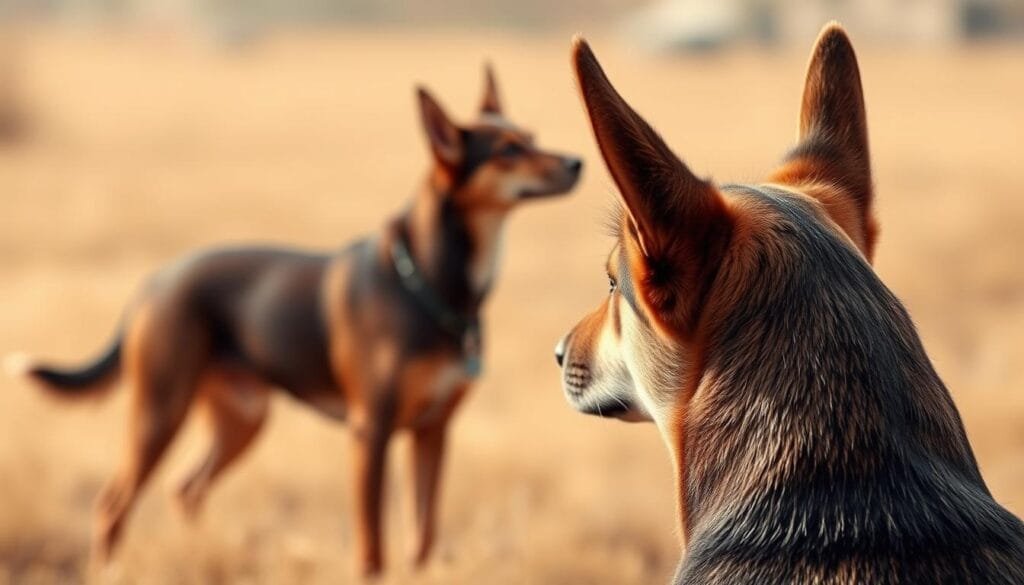
Decoding Your Dog’s Ear Positions

Dog Ear Body Language Guide

Understanding dog body language is key, and ear positions are a big part of it. Dogs use their ears to show a lot of emotions. This makes their ears very expressive.

In a detailed guide on dog body language, ear positions show different feelings:

  • Raised ears: Usually mean they’re very alert and focused
  • Forward-pointing ears: Show confidence and curiosity
  • Pinned back ears: Often mean they’re scared or feeling submissive
  • Relaxed ear position: Shows they’re calm and comfortable

Different dog breeds have unique ear types. For example, Basset Hounds have floppy ears that show emotions in a different way. German Shepherds, with their pointy ears, show emotions more clearly. Knowing these differences helps you understand your dog better.

It’s important to watch your dog’s whole body, not just their ears. This way, you get a full picture of how they’re feeling.

“Ears are windows to a dog’s soul, revealing emotions faster than any other body part.”

Dog trainers say learning about ear language takes time and practice. By paying attention to these small changes, you’ll get closer to understanding your dog’s feelings.

Body Posture and Weight Distribution Signs

Dogs talk a lot through their body language and how they stand. These signs show us how they feel and what they want. It’s like they’re sending us messages all the time.

Knowing how your dog stands tells you a lot about their mind and feelings. If they shift their weight, it can mean they’re calm, stressed, or ready to play.

Forward and Backward Weight Shifts

Dogs subtly change how they stand to show their mood. If they lean forward, it usually means:

  • They’re really interested in something
  • They might be feeling a bit aggressive
  • They’re ready to do something

But if they lean back, it often shows:

  • They’re feeling submissive
  • They’re scared
  • They want to get away

The Play Bow Explanation

The play bow is a key way dogs say they want to play. When a dog lowers its chest but keeps its back end up, it’s like saying, “Let’s play!” This signal is understood by all dogs, no matter their breed.

Stress-Related Postures

Stress Posture Physical Characteristics Possible Emotional State
Cowering Lowered body, tucked tail Fear, anxiety
Freezing Stiff body, minimal movement Extreme stress, potential defensive response
Tucked Tail Tail between legs Submission, uncertainty

By understanding these signs, you’ll get to know your dog’s feelings better. It’s a way to connect with them on a deeper level.

Understanding Hackles and Fur Changes

Dog non-verbal communication offers a peek into their emotional lives. Raised hackles, or piloerection, are a complex signal often misunderstood by dog owners.

When a dog’s fur stands up, it doesn’t always mean they’re aggressive. It’s important to understand the subtleties behind these physical changes.

  • Hackles can indicate multiple emotional states:
  • Excitement during play or anticipation
  • Stress in unfamiliar environments
  • Intense interest in surroundings
  • Potential defensive readiness

About 50% of dogs show raised hackles when meeting new dogs or in stressful places. These changes in fur are key to understanding their body language and emotional state.

Experts say context is key when seeing hackles. A dog’s posture, surroundings, and other signals help understand their feelings.

Hackles are not a definitive sign of aggression, but a nuanced communication tool in dog non-verbal communication.

By watching these small fur changes, you can learn more about your dog’s feelings. This helps you meet their needs better.

Mouth Signals: From Smiling to Lip-Licking

Decoding dog body language shows us how dogs communicate. They use their mouths to show a wide range of feelings. This includes subtle signs of stress and clear emotional states.

Dog mouth body language signals

Dogs send out complex messages with their mouths. Many pet owners miss these signals. Learning to read these signs helps strengthen the bond between you and your dog.

The Submissive Grin

A submissive grin might look like aggression at first. But it’s actually a sign of peace. Dogs show it to say they mean no harm. Look for these signs:

  • Slightly pulled back lips
  • Visible teeth without aggressive tension
  • Relaxed facial muscles
  • Often accompanied by a lowered head or averted gaze

Stress-Related Mouth Behaviours

Lip licking is a key sign of stress or anxiety in dogs. Studies show 70% of the time, it means they’re feeling uncomfortable or upset.

Other signs of stress include:

  1. Excessive lip licking
  2. Frequent yawning
  3. Panting without physical exertion
  4. Showing the whites of their eyes

Veterinary Behaviourist Dr. Grace Thurtell says lip licking when not eating is a big stress sign in dogs.

By watching for these mouth signals, owners can understand their dog’s feelings better. This helps create a more loving and supportive relationship.

Signs of Stress and Anxiety in Dogs

Understanding your dog’s body language is key to knowing how they feel. It’s important to watch for subtle signs of stress. These signs can tell you a lot about your dog’s emotional state.

Dogs show anxiety in many ways that owners might not notice. These signs are important for understanding their feelings and if they’re uncomfortable.

  • Excessive yawning
  • Frequent lip-licking
  • Avoiding direct eye contact
  • Shaking off as if wet
  • Crouched body posture
  • Lowered ears

Studies show that many dog owners struggle to spot stress signals. About 90% of dog owners find it hard to identify these signs. This can lead to misunderstandings and problems with their behaviour.

Stress Indicator Percentage of Dogs Exhibiting
Excessive panting 45%
Weight shift to rear legs 50%
Increased shedding 25%
Sudden urination 20%

It’s crucial to understand these signs to avoid bigger problems. If their stress signals are ignored, dogs may become more aggressive.

Recognising and responding to your dog’s stress signals can prevent potential behavioural complications and strengthen your bond.

By learning to read your dog’s body language, you can make their environment safer and more comfortable. This supports their emotional health.

Reading Happy and Relaxed Dog Signals

Understanding your dog’s emotions is a journey into their world. Dogs mostly communicate through body language, with 90% being non-verbal. Knowing when your dog is happy and relaxed strengthens your bond.

A happy dog shows clear signs of their mood. In our guide, we’ll look at the key signs of a dog’s happiness:

  • Soft, squinty eyes that appear relaxed
  • Ears in a neutral, loose position
  • A loose, wiggling body posture
  • Gentle tail wagging at mid-height

Studies show 75% of happy dogs have a relaxed body. They have soft shoulders and gentle eye contact. When your dog is truly at ease, you’ll see:

  1. A playful demeanour with occasional play bows
  2. Calm breathing and relaxed mouth
  3. Willingness to engage and interact

“A dog’s body language is a window into their soul, revealing their deepest emotions without a single bark.”

A full-body shake-off means a dog is calming down. It lowers their heart rate after stress. This is a key part of their language that owners should know.

By learning these signals, you’ll connect deeper with your dog. This ensures a happy and understanding relationship.

Conclusion

Learning about canine body language is a skill that takes time and effort. Dogs use many physical signs to talk to us. It’s key for pet owners to get good at reading these signs.

By understanding these signs, we can connect with our dogs on a deeper level. It’s not just about simple movements. It’s about building a strong bond with them.

Recognising the small details in a dog’s body language is important. Things like tail movements and ear positions tell us how they’re feeling. They can show if they’re calm, worried, or excited.

By paying attention to these signs, we can have a better relationship with our dogs. It makes our bond stronger and more understanding.

Experts say that practice and watching your dog closely are key. Every dog is different, so what works for one might not work for another. But with effort, you can improve how you understand your dog.

By learning more, you can build trust and respect with your dog. This makes your time together better and more meaningful.

If you want to get better at understanding your dog, talk to a professional trainer. Malcolm at 089-4120124 can help you learn more about dog language. Together, you can grow your connection with your dog.

FAQ

ow can I tell if my dog is stressed?

Look for signs like excessive yawning and lip-licking. Avoiding eye contact and trembling are also signs. A tucked tail and pinned-back ears show stress too.These signals mean your dog is anxious or uncomfortable. They need your support.

What does a dog’s tail wag really mean?

Tail wagging isn’t always a sign of happiness. The position, speed, and direction of the wag are crucial. A high, fast wag shows excitement.A low, slow wag might signal uncertainty or anxiety. A tail held high and wagging slightly suggests confidence. A tucked tail indicates fear or submission.

How do I interpret my dog’s ear positions?

Ear positions are incredibly expressive. Forward-facing ears indicate alertness or interest. Ears flattened against the head can signal fear or submission.Slightly back ears might indicate uncertainty or mild concern. Remember, breed variations can affect ear positioning. It’s important to consider your dog’s specific characteristics.

What does a ‘play bow’ actually mean?

A play bow is when a dog lowers its front chest to the ground while keeping its rear end up. This is a classic invitation to play. It means your dog is feeling playful and wants to engage.It’s a friendly gesture that signals non-aggressive intentions. A desire to interact and have fun is shown.

Can dogs smile like humans do?

Dogs don’t smile in the same way humans do. What might look like a smile could actually be a submissive grin or a sign of stress. A relaxed, open mouth with a loose jaw typically indicates a happy, comfortable dog.Always look at the entire body language, not just the mouth, to understand your dog’s true emotional state.

What does ‘whale eye’ mean?

‘Whale eye’ occurs when a dog shows the whites of their eyes while turning their head away. This is typically a sign of anxiety, stress, or discomfort. It suggests the dog is feeling threatened or unsure.It’s a way they communicate they feel uncomfortable in the current situation.

How can I tell if my dog is happy?

A happy dog will have soft, relaxed eyes and a loose, wiggly body posture. They’ll have a tail wagging at mid-height. They’ll appear relaxed, might have a slightly open mouth, and show no signs of tension.Their ears will be in a neutral position, and they’ll seem generally calm and content.

Why do dogs lick their lips when they’re not eating?

Lip-licking is often a stress signal that indicates anxiety or discomfort. It can be a subtle way dogs communicate they’re feeling uncertain or overwhelmed. While occasional lip-licking is normal, frequent or prolonged lip-licking might suggest your dog is experiencing stress or tension in their environment.

Source Links